For a long time, science stood upon a premise as solid as it was naïve: that reality could be measured. That whatever existed must be translated into data, into an instrument, into a correlation. Modern culture turned the fact into its religion and the laboratory into its temple. From that belief emerged the evidence-based model —the conviction that knowledge could rest solely on empirical proof, on repetition, on the number that confirms. Yet consciousness —that elusive territory that obeys neither method nor repetition— has become the new frontier.
Science has not failed; it has reached a limit. During the so-called Decade of the Brain, neuroimaging became the mirror through which the world sought to recognize itself. What oracles and philosophers once did was now done by scanners: to reveal the soul, only this time translated into statistical colors. Contemporary science inherited from the nineteenth century a nearly metaphysical faith in its own method, a trust in precision as a substitute for truth. But consciousness resists the algorithm. As Socrates once said, I know that I know nothing. Perhaps that is the threshold that science still hesitates to face.
The question is not whether scientists are ready to measure new phenomena. The question is whether they are ready to admit that there are things that cannot be measured. What lies ahead will not be an expansion of instruments but a transformation of the observer. Consciousness cannot be studied from the outside. It cannot be isolated in a sample or repeated in an experiment. It must be inhabited, traversed, embodied. The great advances to come will not arise from technical refinement but from epistemic humility —from recognizing that reality exceeds the methods used to investigate it.
I have lived in the United Arab Emirates for years, in a place where every three months the landscape changes. I no longer try to learn the routes, because I know that soon something new will emerge from the desert. I simply observe what is constantly in mutation. Knowledge today behaves in much the same way. Science advances faster than its own capacity to understand what it produces. It publishes, replicates, patents —yet rarely pauses to ask what it means. We live in an ecosystem of perpetual acceleration, where evidence multiplies but meaning evaporates. Method has replaced wonder; calculation has replaced mystery.
And still, what awaits us is not the collapse of science but its metamorphosis. Biology now speaks of cooperation, physics of entanglement, neuroscience of subjective experience. Slowly, scientific discourse approaches what ancient wisdom always knew: that knowledge is not accumulation but integration; that to understand something is to become permeable to it; that there is no truth without transformation.
The system founded on evidence now faces its own ethical and ontological limits. Consciousness is not an object to be observed but a relation to be lived. The science to come will have to become less imperial and more humble, less mechanical and more poetic. It will have to accept that reality does not end at the edge of description, that there is knowledge in intuition, in beauty, in silence. When that day arrives —when science, like Socrates, knows that it knows nothing— perhaps we will be ready for a new kind of truth: one that cannot be demonstrated, only felt.
It is now clear that science is no longer the matrix through which we will explain the world. Its language, however precise, is too narrow to contain the complexity of the living. The universe we inhabit does not translate into formulas —it reveals itself through correspondences. What is emerging is not a post-science, but an expanded consciousness: a way of knowing that integrates perception, presence, and interior experience. We have crossed from the paradigm of measurement into that of participation. It is not about abandoning reason, but expanding it until it touches the invisible. And when that happens, it will not be the end of science, but the beginning of a knowledge beyond known limits.
About the Author
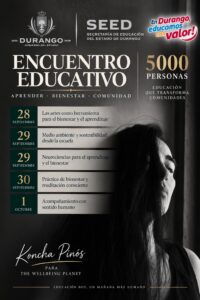
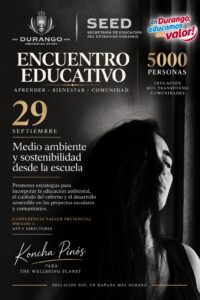
Dr. Koncha Pinós Pey is a neuroaesthetic researcher, writer, and founder of The Wellbeing Planet Foundation, based in UAE. Her work explores the intersections between art, science, and contemplative consciousness, with a focus on biophilia, perception, and human flourishing. Read her here Biofilia y Arte and Biophilia and Art.
Recommended Reading
- Socrates – Apology (for the idea that true knowledge begins in recognizing one’s ignorance)
- Aristotle – Metaphysics (for the union of thought, being, and the search for causes)
- Ibn Sina (Avicenna) – Book of Healing (for the articulation of intellect as both rational and divine)
- Al-Farabi – The Virtuous City (for the integration of philosophy, cosmology, and ethics)
- David Bohm – Wholeness and the Implicate Order (for the notion of interconnected reality)
- Iain McGilchrist – The Master and His Emissary (for the exploration of divided knowing and the return to wholeness)
- Susan Sontag – Against Interpretation (for her insistence that thought must recover its sensuous depth)