
The Architecture of the Divine Names
La Arquitectura de los Nombres Divinos
An Experimental Theological Aesthetics of the 72 and 99 Names of God
Una estética teológica experimental de los 72 y 99 Nombres de Dios
Dr. Koncha Pinós, Dr. Shada Al-Ghazali and Orly Mekler
Asistencia Cientifica: Lic. Catalina Miranda – Lic. Nancy Limon
Abstract
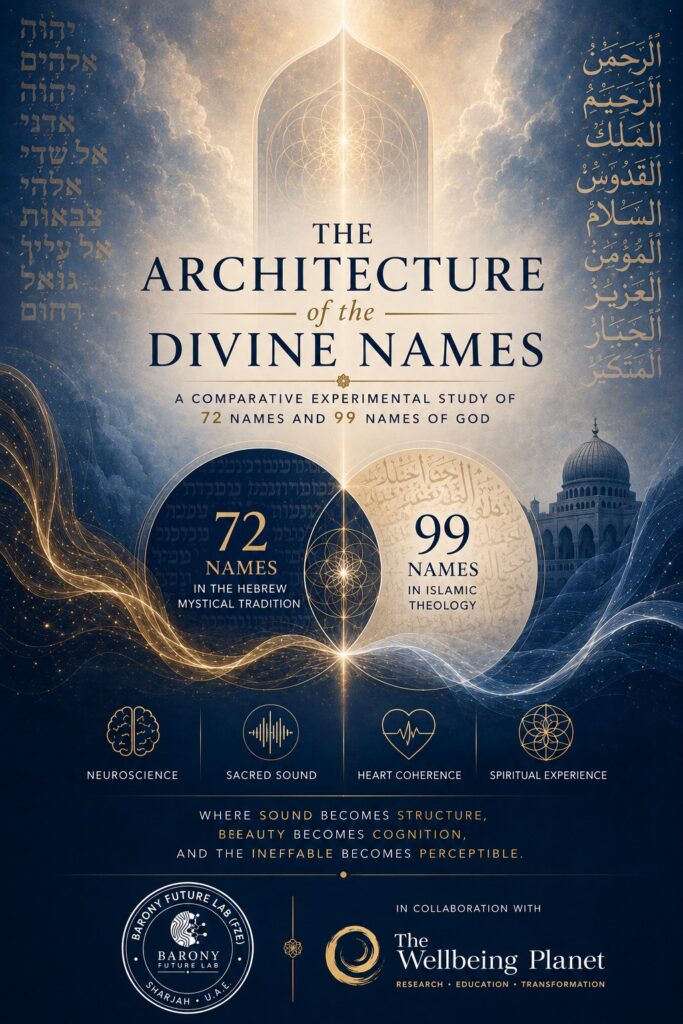
This study contributes to the Special Issue on Experimental Theological Aesthetics (XTA) by examining how sacred language functions as an aesthetic and theological medium for divine encounter. Entitled The Architecture of the Divine Names, this ongoing research—to be published in April 2026—investigates the comparative experiential impact of the 72 Names of God in the Hebrew mystical tradition and the 99 Names of God in Islamic theology on consciousness, emotion, and spiritual awareness.
The project brings together art, theology, and empirical science to explore how sacred forms and sounds mediate the human search for the Divine. The study will be conducted in four countries, engaging a cohort of 200 participants—Muslim and Jewish, believers and non-believers—who will be exposed to the Divine Names in their visual (written), auditory (recited), and musical (sung) modalities.
Integrating neurophenomenology, voice prosody, facial emotion recognition, and cardiac coherence analysis, the research examines how the rhythm, geometry, and resonance of sacred language elicit measurable physiological and emotional shifts—states of calmness, reverence, and connection to transcendence.
By uniting theological interpretation with empirical investigation, this project seeks to advance XTA’s core objective: understanding how aesthetic experience fosters spiritual meaning, devotion, and encounters with the Divine. It proposes that sacred language itself constitutes a living architecture of revelation—a bridge where sound becomes structure, beauty becomes cognition, and the ineffable becomes momentarily perceptible to human consciousness.
Keywords: Experimental Theological Aesthetics, Sacred Language, Divine Names, Calligraphy, Neuroaesthetics, Heart Coherence, Consciousness, Comparative Theology, Spiritual Experience


Resumen
Este estudio forma parte del número especial sobre Estética Teológica Experimental (XTA) y examina cómo el lenguaje sagrado funciona como un medio estético y teológico para el encuentro con lo divino. Titulado La Arquitectura de los Nombres Divinos, esta investigación —que será publicada en abril de 2026— explora el impacto experiencial comparado de los 72 Nombres de Dios de la tradición hebrea y los 99 Nombres de Dios de la teología islámica sobre la conciencia, la emoción y la percepción espiritual.
El proyecto reúne arte, teología y ciencia empírica para investigar cómo las formas y los sonidos sagrados median la búsqueda humana de lo divino. El estudio se llevará a cabo en cuatro países, con la participación de 200 personas —musulmanas y judías, creyentes y no creyentes— que serán expuestas a los Nombres Divinos en sus modalidades visuales (escritas), auditivas (recitadas) y musicales (cantadas).
A través de la integración de métodos de neurofenomenología, prosodia de la voz, reconocimiento facial emocional y análisis de coherencia cardíaca, la investigación examina cómo el ritmo, la geometría y la resonancia del lenguaje sagrado generan cambios fisiológicos y emocionales medibles: estados de calma, reverencia y conexión con la trascendencia.
Al unir la interpretación teológica con la investigación empírica, este proyecto busca avanzar en el objetivo central de la XTA: comprender cómo la experiencia estética fomenta el significado espiritual, la devoción y el encuentro con lo divino. Propone que el propio lenguaje sagrado constituye una arquitectura viva de la revelación: un puente donde el sonido se transforma en estructura, la belleza en cognición y lo inefable se vuelve momentáneamente perceptible a la conciencia humana.
Palabras clave: Estética Teológica Experimental, Lenguaje Sagrado, Nombres Divinos, Caligrafía, Neuroestética, Coherencia Cardíaca, Conciencia, Teología Comparada, Experiencia Espiritual
خلاصة
تساهم هذه الدراسة في العدد الخاص حول الجماليات اللاهوتية التجريبية (XTA) من خلال دراسة كيفية عمل اللغة المقدسة كوسيلة جمالية ولاهوتية لللقاء الإلهي. بعنوان هندسة الأسماء الإلهية، يبحث هذا البحث المستمر – الذي سيتم نشره في أبريل 2026 – في التأثير التجريبي المقارن لأسماء الله ال 72 في التقاليد الصوفية العبرية وأسماء الله ال 99 في اللاهوت الإسلامي على الوعي والعاطفة والوعي الروحي.
يجمع المشروع بين الفن واللاهوت والعلوم التجريبية لاستكشاف كيف تتوسط الأشكال والأصوات المقدسة في البحث البشري عن الإلهي. ستجرى الدراسة في أربعة بلدان، وستشارك فيها مجموعة من 200 مشارك – مسلمون ويهود ومؤمنون وغير مؤمنين – الذين سيتعرضون للأسماء الإلهية في طرائقها البصرية (المكتوبة) والسمعية (المتلاوة) والموسيقية (المغنى).
من خلال دمج الظوائر العصبية، والنثر الصوتي، والتعرف على مشاعر الوجه، وتحليل تماسك القلب، يدرس البحث كيف يؤدي إيقاع اللغة المقدسة وهندستها ورنينها إلى تحولات فسيولوجية وعاطفية قابلة للقياس – حالات الهدوء والتبجيل والاتصال بالتجاوز.
من خلال توحيد التفسير اللاهوتي مع التحقيق التجريبي، يسعى هذا المشروع إلى تعزيز الهدف الأساسي ل XTA: فهم كيف تعزز التجربة الجمالية المعنى الروحي والتفاني واللقاءات مع الإلهي. يقترح أن اللغة المقدسة نفسها تشكل بنية حية للوحي – جسر حيث يصبح الصوت بنية، ويصبح الجمال إدراكا، ويصبح ما لا يوصف محسوسا للحظة للوعي البشري.
الكلمات الرئيسية: الجماليات اللاهوتية التجريبية، اللغة المقدسة، الأسماء الإلهية، الخط، علم الجمال العصبي، تماسك القلب، الوعي، اللاهوت المقارن، التجربة الروحية